
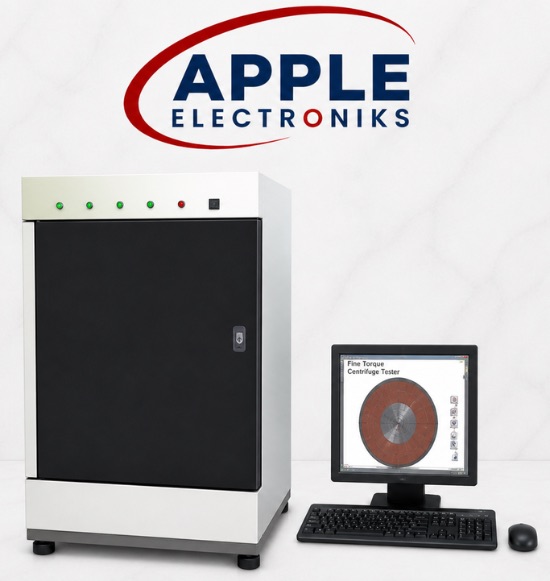
FDT Fabric Drape Tester
The FDT Fabric Drape Tester measures and calculates the coefficient of drape of fabrics using image processing technology, and is suitable for testing the drape property of all kinds of woven, knitted, and nonwoven fabrics. The instrument is equipped with a CCD imaging system that captures both dynamic and static images of the draped specimen — allowing the drape coefficient to be determined with full objectivity, independent of operator interpretation. Specimens in all colours can be tested without any need to change the background colour, making the system versatile across the full range of fabric shades encountered in production and quality control environments.
The instrument operates under computer control with fully automatic image acquisition and processing. The turntable rotates at an adjustable speed between 20 and 300 rpm, and the specimen support moves at 800 mm/min to correctly position the sample. Three specimen clamp diameters (Φ120mm and Φ180mm) and three specimen sizes (240mm, 300mm, 360mm) are supported as standard, covering the specimen configurations specified by the major international test standards. The drape coefficient is measured across the full 0 to 100% range with an accuracy of ±1.5%, providing reliable discrimination between stiff and highly drapeable fabrics.
The Windows-based measuring software offers a variety of charts and data statistical analysis, with all test results displayed on screen, stored automatically, and available for print or export. No paper rings are required at any stage of the test, eliminating the preparation time and consumable cost associated with traditional ring-based drape measurement methods. The fully automatic imaging approach also delivers significantly better repeatability and accuracy compared to manual or semi-manual drape testers, and the detailed test report can be printed directly or saved from the software.
Specifications
Working Pattern
Computer Controlled, CCD imaging, full automatic processing of images and computer data
Specimen Clamp Plate
Diameter of Φ180mm and Φ120mm
Turntable Rotation Speed
20 rpm – 300 rpm (adjustable)
Specimen Support Moving Speed
800 mm/min
Specimen Dimension
Φ240mm, Φ300mm, Φ360mm
Drape Coefficient
0 – 100% ± 1.5%
Power
220V, 50Hz, 120W
Weight
85 kg
Dimensions (L × W × H)
630 × 580 × 1270 mm
Standard Configuration
Φ120mm and Φ180mm specimen clamps; Φ240mm, Φ300mm, Φ360mm sampling templates and calibration plates (3 types for 30%, 50%, 70%); Windows-based measuring software
Key Features
Fully automatic system acquires a photographic image of the draped specimen on the computer without any manual intervention — eliminating the subjectivity and inconsistency that affect traditional visual or ring-based drape assessment methods
Drape coefficient results are generated automatically by the software from the captured image — no manual tracing, weighing of paper rings, or calculation steps are required by the operator
All test data are displayed on screen in real time and saved automatically — providing a complete digital record of every test result for QC documentation and traceability
No paper rings required at any stage of the test, saving significant consumable cost and preparation time while also making the process faster and more accurate than ring-based methods
Fully automatic image acquisition and processing ensures excellent test repeatability and high accuracy, meeting the repeatability requirements of the relevant international standard methods
Test Standards
BS EN 9073
BS 5058
ERT 90-1
AFNOR G07-109
UNI 8279
FZ/T 01045
Key Highlights
CCD Imaging – Fully Automatic Drape Photography
The FDT uses a built-in CCD camera to capture both dynamic and static images of the draped specimen automatically under computer control. The imaging system processes the drape silhouette digitally and calculates the drape coefficient directly from the image data — removing any requirement for manual tracing or interpretation. The result is a fully objective, operator-independent measurement of drape that can be performed consistently across multiple shifts and operators without variation in technique.
No Paper Rings – Cost-Saving, Fast & Accurate Testing
Traditional drape testers require the operator to trace the shadow of the draped specimen onto a paper ring, cut it out, and weigh it to determine the drape coefficient — a process that is time-consuming, operator-dependent, and incurs ongoing consumable costs. The FDT eliminates this entirely: all measurement is performed digitally by the CCD imaging system and software, making each test faster, cheaper, and more reproducible than ring-based methods, while the digital output is directly suitable for statistical analysis and reporting.
All Fabric Colours Testable Without Background Changes
A common limitation of image-based drape testers is that dark or light fabrics can be confused with the background, requiring operators to swap backgrounds between tests. The FDT's imaging and processing system is designed to correctly detect the drape silhouette of specimens in all colours — from white and cream to navy, black, and patterned fabrics — without any adjustment to the background or lighting setup. This makes the instrument genuinely versatile for production and quality control laboratories that handle a wide variety of fabric types and shades.
Drape coefficient is the ratio of the area of the projected draping shadow of a fabric specimen to the original unsupported area, expressed as a percentage. A high drape coefficient (close to 100%) indicates a stiff fabric that drapes very little; a low value indicates a highly drapeable, fluid fabric. The FDT measures drape coefficient automatically using a CCD camera that captures an image of the specimen draped over a support disk. The imaging software analyses the shadow area digitally and calculates the drape coefficient in the range 0 to 100% with an accuracy of ±1.5% — without any manual tracing or ring-based measurement steps.
The FDT is designed to test the drape property of all kinds of fabrics — woven, knitted, and nonwoven — across the full range of fabric weights and constructions. A key advantage of the CCD imaging system is that specimens in all colours can be tested without changing the background colour of the instrument. This eliminates the manual background adjustment that many image-based drape testers require when switching between light and dark fabrics, making the FDT well suited to production and QC laboratories that regularly test a diverse range of fabric shades and types within a single shift.
The FDT standard configuration includes specimen clamp plates of Φ120mm and Φ180mm diameter, together with three specimen sampling template sizes — Φ240mm, Φ300mm, and Φ360mm — and calibration plates for 30%, 50%, and 70% reference values. These specimen sizes cover the configurations specified by BS EN 9073, BS 5058, FZ/T 01045, and the other international standards the instrument complies with. The appropriate combination of clamp plate and specimen size is selected according to the test standard being applied, and all templates and clamps are supplied as standard with the instrument.
The turntable rotation speed on the FDT is adjustable from 20 rpm to 300 rpm. Some drape test standards specify measurement at a particular rotation speed to capture the dynamic drape profile — the way a fabric moves and hangs under simulated motion conditions. By supporting a wide speed range, the FDT can comply with the rotation requirements of different standards. Dynamic images captured at the specified rotation speed are processed alongside static images, giving a more complete picture of the fabric's drape behaviour under real-use conditions compared to static-only measurement methods.
The FDT Fabric Drape Tester complies with the following international standards for fabric drape testing: BS EN 9073 (nonwoven fabrics), BS 5058 (woven and knitted fabrics, British Standard), ERT 90-1 (EDANA standard for nonwovens), AFNOR G07-109 (French standard), UNI 8279 (Italian standard), and FZ/T 01045 (Chinese textile industry standard). This broad standards coverage makes the FDT suitable for use in export quality control laboratories and testing facilities that need to certify fabrics against the requirements of multiple international markets.
In traditional drape testers, the operator places a paper ring under the specimen, traces the outline of the shadow projected by the draped fabric onto the ring, cuts out the traced area, and weighs the paper cutout to calculate the drape coefficient. This process is slow, wasteful, and subject to operator variability in tracing and cutting. The FDT replaces this entirely with CCD image capture and digital image analysis — the camera images the drape silhouette directly and the software computes the projected area ratio automatically, eliminating all paper consumables, tracing steps, and weighing, while delivering superior repeatability and accuracy.
The Windows-based measuring software supplied with the FDT offers a variety of charts and data outputs. After each test, the software displays the static drape coefficient, dynamic drape coefficient, lively rate, aesthetic coefficient, stiffness coefficient, and ripple number — providing a comprehensive profile of the fabric's drape characteristics beyond a single coefficient value. Statistical outputs including average, maximum, minimum, and CV are calculated automatically across the test batch. All data can be saved, and the test report can be printed or exported directly from the software interface.
The FDT operates on a standard 220V, 50Hz supply with a power consumption of 120W. The instrument weighs 85 kg and has external dimensions of 630mm (L) × 580mm (W) × 1270mm (H), making it a floor-standing unit that requires a stable, level floor installation. A connected computer is required to run the Windows-based measuring software; in the standard configuration this is supplied with the instrument. No compressed air or special utilities are required beyond the electrical supply, and the instrument should be positioned in a laboratory environment free from strong vibration or draughts that could affect the freely hanging drape of the specimen during image capture.
WHAT OUR CLIENTS SAY
Trusted by industries worldwide for precision testing equipment and reliable solutions.
Send Your Requirement
Looking for laboratory testing equipment, material testing machines, or customized automation systems? Share your requirement and our team will get back to you with the right solution.
WATCH APPLE ELECTRONIKS
Explore our precision testing machines, industrial solutions, and engineering capabilities through our company video.
- Precision-engineered testing machines
- Wide range of industrial testing solutions
- Customized systems based on requirements
- Serving textile, polymer, and electrical industries
- Focus on quality, accuracy, and reliability


