
Textile Testing Equipment Every Fabric Manufacturer Should Know
The textile industry depends heavily on quality, durability, comfort, and performance. From garment fabrics to technical textiles, every material must pass certain quality checks before reaching the customer. Textile testing equipment helps manufacturers understand how their fabrics will behave during use, washing, stretching, rubbing, exposure, and processing.
Fabric manufacturers use different types of testing machines to check physical, mechanical, and safety properties. These tests help ensure that the fabric meets buyer requirements, export standards, and internal quality benchmarks. Without proper textile testing, manufacturers may face rejection, complaints, inconsistent quality, and production losses.
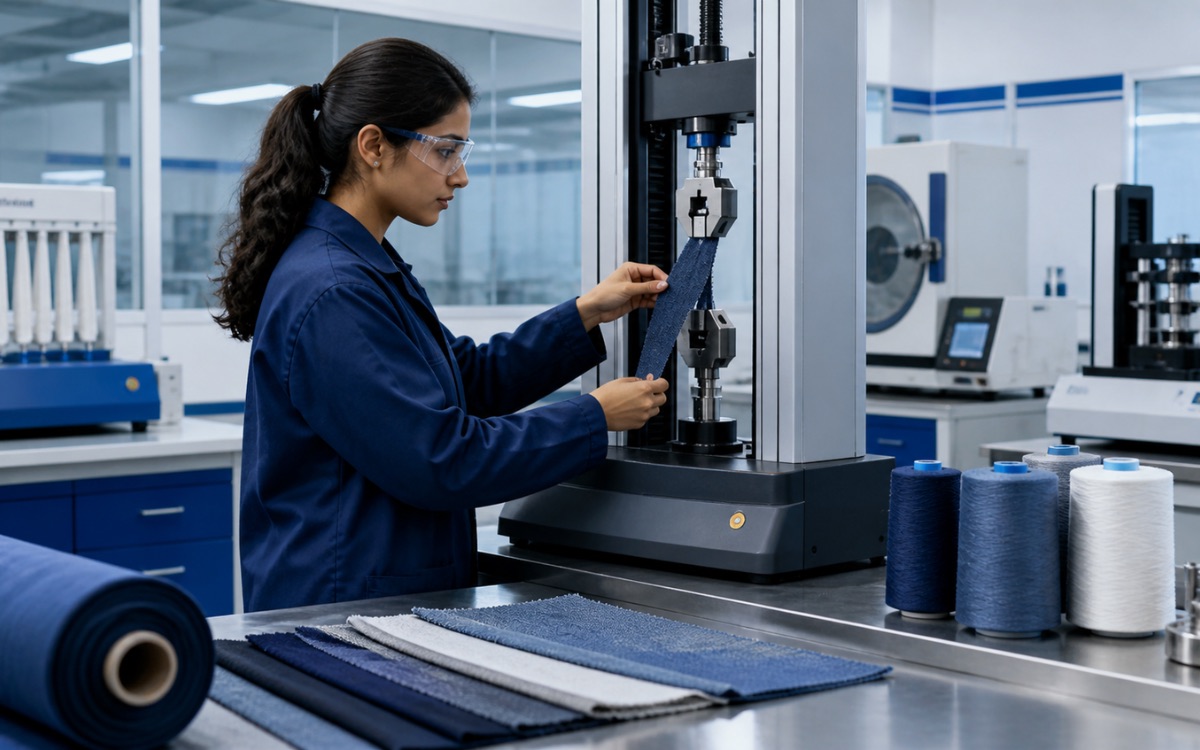
One of the most common tests in textile manufacturing is tensile strength testing. This test helps measure how much force a fabric can handle before breaking. It is especially important for woven fabrics, nonwoven materials, industrial textiles, coated fabrics, and technical fabrics used in demanding applications.
Textile testing equipment helps fabric manufacturers maintain consistency, improve buyer confidence, reduce rejection, and produce materials that perform reliably in real-world applications.
Shrinkage testing is another important area in textile quality control. Fabrics may shrink after washing, steaming, drying, or heat treatment. If shrinkage is not controlled, the final garment or product may lose its shape, size, and fitting. Shrinkage testing equipment helps manufacturers check dimensional stability before final production.
Air permeability testing is useful for fabrics used in garments, sportswear, medical textiles, filtration materials, hygiene products, and technical textiles. It measures how easily air passes through the fabric. This is important for comfort, breathability, and functional performance.
Abrasion testing is used to check how well a fabric can resist rubbing and surface wear. This is important for upholstery, denim, uniforms, footwear materials, bags, and industrial fabrics. A fabric with poor abrasion resistance may lose its appearance or strength after short use.
Flammability testing is also important, especially for protective clothing, upholstery, automotive textiles, curtains, industrial fabrics, and safety-related applications. It helps measure how a fabric reacts when exposed to flame or heat under controlled testing conditions.
Apple Electroniks provides textile testing equipment for quality control laboratories, textile manufacturers, fabric processors, garment units, and research departments. These machines help businesses maintain consistent fabric quality and reduce the risk of product failure.
For textile companies, testing is not just a technical process. It is a business advantage. Reliable testing helps improve buyer confidence, reduce complaints, meet standards, and create better products. Whether you manufacture apparel fabrics, industrial textiles, nonwoven materials, or technical fabrics, the right textile testing equipment can help improve quality and performance at every stage.


