
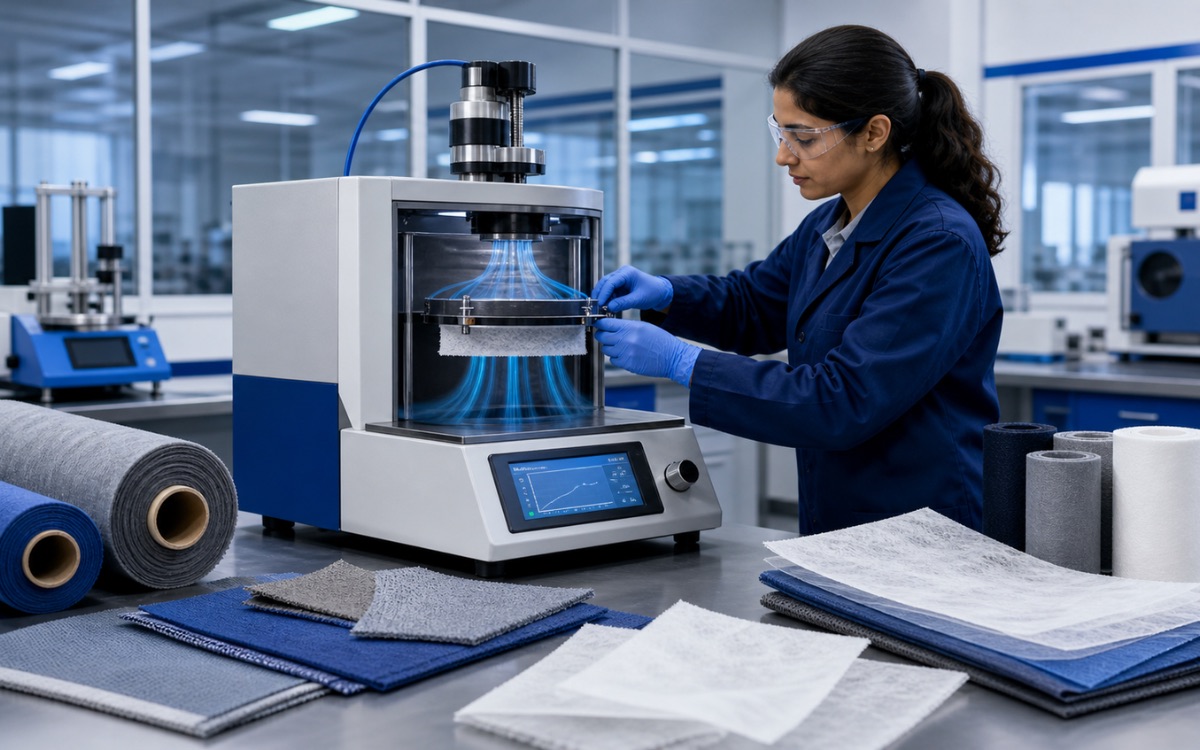
Importance of Air Permeability Testing in Textile and Nonwoven Materials
Air permeability testing is an important quality control process for textiles, nonwoven materials, technical fabrics, filtration media, medical textiles, hygiene products, and performance materials. It helps measure how easily air passes through a material under controlled test conditions.
Breathability and airflow performance are critical for many products. A fabric used in garments should allow comfort and ventilation, while a filtration material may require controlled airflow for proper performance. Nonwoven materials used in medical, hygiene, and industrial applications also need consistent air permeability to meet functional requirements.
Air permeability testing helps manufacturers understand whether a material is too dense, too open, or suitable for the intended application. If airflow is too low, the material may feel uncomfortable, restrict ventilation, or reduce performance. If airflow is too high, it may fail to provide the required barrier or protection.
Air permeability testing equipment helps manufacturers measure breathability, improve material performance, maintain consistency, and meet quality expectations in textile and nonwoven applications.
In the textile industry, air permeability testing is useful for apparel fabrics, sportswear, uniforms, upholstery, technical textiles, coated fabrics, and industrial fabrics. It helps manufacturers balance comfort, durability, and functional performance depending on the final use of the material.
For nonwoven materials, air permeability is especially important in applications such as medical masks, hygiene products, wipes, filtration media, protective materials, and industrial sheets. These products often require a specific airflow level to perform correctly and consistently.
Apple Electroniks provides air permeability testing equipment designed for laboratories, textile manufacturers, nonwoven material producers, quality control teams, and research departments. These machines help companies test samples accurately and make better production decisions.
Air permeability testing also helps reduce batch-to-batch variation. When manufacturers regularly test materials, they can quickly identify changes in yarn structure, fabric density, finishing process, coating level, or nonwoven formation. This helps correct issues before the product reaches buyers or end users.
Accurate testing supports product development as well. Manufacturers can compare different fabric constructions, fiber blends, treatments, and finishing methods to create materials with the right balance of comfort, protection, and performance.
For businesses working with textiles, nonwovens, filtration materials, protective products, or technical fabrics, air permeability testing is a valuable part of quality control. It helps improve reliability, reduce complaints, support compliance, and deliver better-performing materials to the market.


