
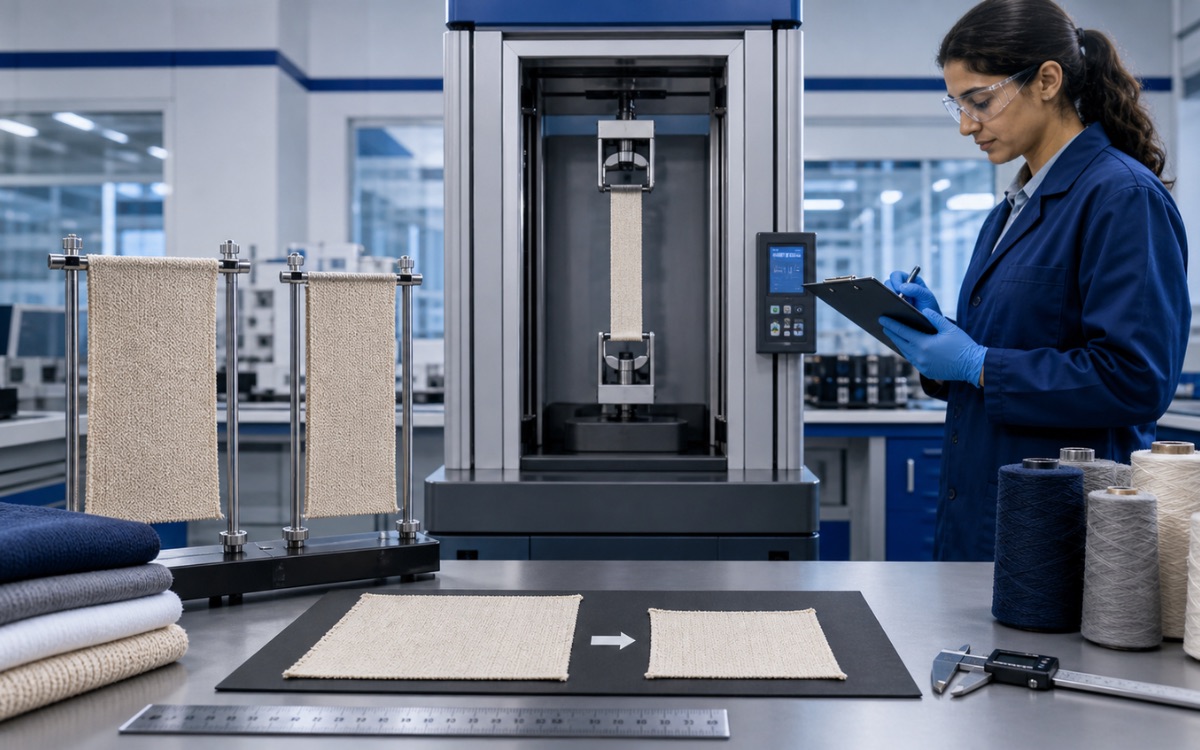
How Shrinkage Testing Helps Improve Fabric and Material Quality
Shrinkage is one of the most common quality issues in textiles and flexible materials. When fabric changes size after washing, steaming, drying, or heat exposure, it can affect the final product’s appearance, fitting, shape, and usability. Shrinkage testing equipment helps manufacturers measure and control this problem before the material reaches the customer.
In the textile industry, shrinkage can create major challenges. A garment may become smaller after washing, a fabric roll may not meet buyer specifications, or a finished product may lose its original shape. These problems can lead to customer complaints, product returns, and rejection from buyers.
Shrinkage testing allows manufacturers to check how much a material changes under specific conditions. This helps them understand whether the fabric is stable enough for production and whether it can perform properly during washing, finishing, storage, and regular use.
Shrinkage testing equipment helps manufacturers control dimensional stability, reduce production rejection, improve product fitting, and deliver consistent fabric quality.
Shrinkage testing is especially important for cotton fabrics, blended fabrics, knitted materials, denim, wool, technical textiles, home furnishing fabrics, and processed textile materials. It is also useful for nonwoven and industrial materials where dimensional stability is important.
By using shrinkage testing equipment, manufacturers can improve process control. If a material shows high shrinkage, the production team can adjust washing, finishing, heat-setting, drying, or processing methods before the product enters bulk production.
Apple Electroniks provides shrinkage testing equipment for textile laboratories, garment manufacturers, processing units, fabric mills, and quality control departments. These machines help companies maintain consistency and meet buyer requirements with more confidence.
Shrinkage testing also supports export quality standards. Many buyers and brands require fabric shrinkage data before approving bulk production. Having accurate testing equipment helps manufacturers provide reliable test results and respond professionally to quality requirements.
For any textile manufacturer, controlling shrinkage is necessary for product quality. It improves garment fitting, reduces complaints, supports buyer approval, and increases overall customer satisfaction.
In simple terms, shrinkage testing helps manufacturers avoid costly mistakes. It gives clear data before production, allowing companies to deliver better, more stable, and more reliable textile products to the market.


